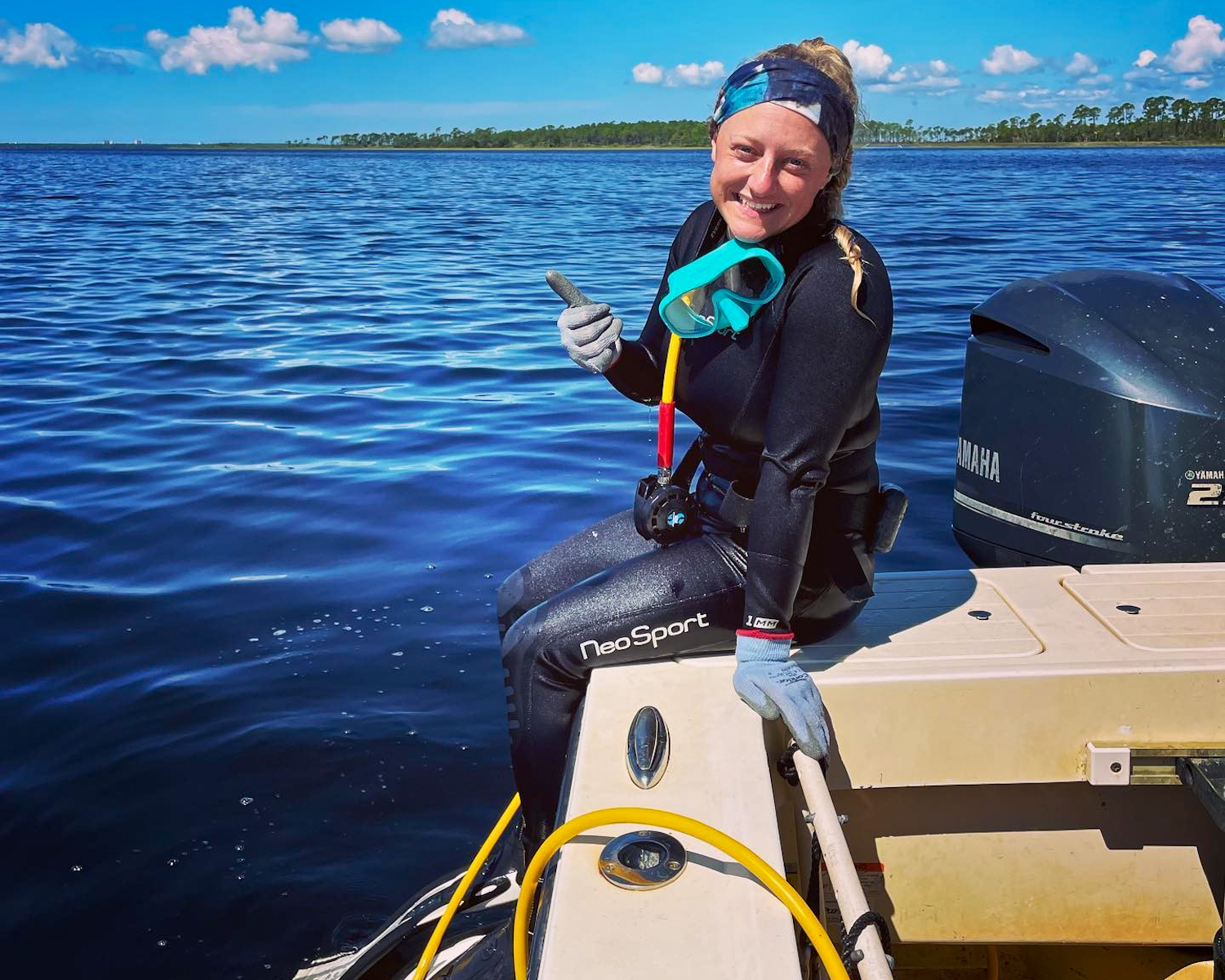
PSRF is pioneering restoration practices to recover the natural recruitment of bull kelp on a landscape scale in areas where bull kelp were found historically. Our experimental outplanting and enhancement trials involve seed transfers and other techniques to learn what works and what doesn’t to reforest kelp.
In our kelp rebuilding, we focus on three key questions:
- Recruitment – How does kelp recruit to both natural and kelp-enhanced substrates?
- Generational success – Does the presence of adult bull kelp influence recruitment of a second generation?
- Seed Dispersal – What is the spatial gradient of bull kelp seed dispersal?
Jefferson Head / Doe Kag Wats Estuary
PSRF has led extensive work off Jefferson Head and the Doe Kag Wats estuary (JHDKW), with support from NOAA and the Suquamish Tribe. Each year since 2020, bull kelp from our pilot-scale enhancement at JHDKW has grown from seafloor to surface – an event which had not been observed since the early 1990s. Since 2023, we have observed bull kelp recruitment on natural substrate in the area, some of which have reached reproductive maturity, with strong evidence suggesting these are second generation kelp produced from previous years’ outplant.
Once the outplanted kelp reaches the surface at the enhancement site, PSRF transitions to surface monitoring surveys, collecting morphometric data to track the growth rate, reproductivity, biomass, and longevity of the kelp bed. For comparison, we also survey wild bull kelp forests at Magnolia (our geographical comparison site) and North Beach (our source population site).
Collaborative Projects
PSRF collaborates with a multitude of Tribes, agencies and organizations across Puget Sound on bull kelp projects, including:
- Port of Seattle:(2018-2023) As part of the Port of Seattle’s Blue Carbon Initiative, PSRF tested substrate enhancement and seeding efforts to increase macroalgal diversity in Smith Cove in Elliott Bay.
- Squaxin Island Tribe: (2023-present) PSRF began actively working with the Squaxin Island Tribe to conserve and restore their local bull kelp forest – the southernmost remaining kelp forest in Puget Sound. Building from PSRF’s experimental outplant design and knowledge base, as well as the Tribe’s Traditional Ecological Knowledge, juvenile bull kelp have been planted at a site near the existing kelp forest, in an attempt to gain greater understanding on the challenging conditions that kelp in southern Puget Sound face, as well as bolster the number of kelp growing in the area.
- Samish Indian Nation: (Since 2024) PSRF has been collaborating with the Samish Indian Nation to develop a bull kelp outplant site at a targeted culturally significant location (or something like this)… emphasizing that we are contributing our practical knowledge but they are running the show.*****